Invasion may be a heavily impactful and problematic event in real life, but at UNiS 2019, the delegates of the HSC have used it as a comical aid to yell at each other.
Committee began today with the usual General Speaker’s List. Delegates stood up and droned about their policies and stances; not a very promising start to discussion of a riveting issue. The delegate of the United Kingdom even seemed to fall asleep in the middle of his speech, faltering for a second too long before continuing. However, the delegate of Iraq brought a spark of excitement to the floor – standing up, he made his way over to the centre of the room and launched into a dramatic monologue, accompanied by animated hand waving and facial expressions. He talked of trying to prevent war, for the good of the Gulf countries, and the repercussions of slant drilling for oil, but most of his words fell upon deaf ears as all the delegates paid attention mainly to his performance. Kuwait criticized Iraq for making false accusations, and for not repaying such large loans, backed by France, the USA and the UK amongst others. Similarly, Iraq retaliated by calling war inevitable and continuing the use of exaggerated hand actions, as Qatar and the USSR in particular, expressed their support for Iraq.
Regarding loans, Iran suggested Iraq repay the 9 billion Kuwait loaned them before the Iran-Iraq war, in addition to the 40 billion they already owe. Soon enough, France was up, and they definitely got everyone’s attention as the delegates walked to the centre of the room, pointed at Iraq and accused the delegate of climbing up to his ego and jumping down to his IQ, causing the room to erupt with approving bangs on tables.
Dev Joshi seemed to be one of the few people in committee thoroughly enjoying himself as he threw chits from one delegate to another. . As the chair scratched his back with his gavel, delegates discovered that Saddam Hussain had the Chair’s personal phone number and snapchat streak, and had called him to tell him personally that Iraq had invaded Kuwait. As the lights dimmed and delegates murmured excitedly, a video recording of Hussain was projected on the board. This man looked alarmingly like Dev Joshi, but the update was taken seriously nonetheless.
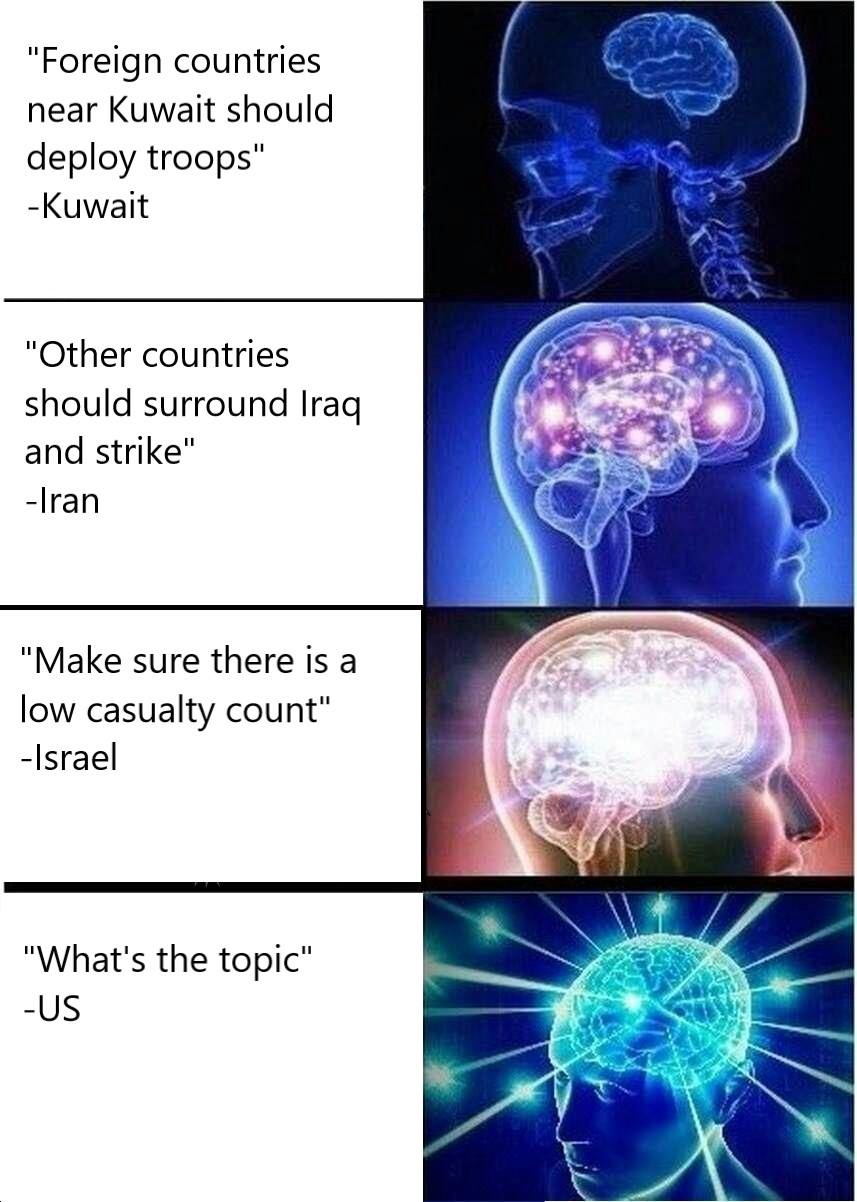
Various delegations voiced their views on the issue. Syria agreed to aid Kuwait by sending troops to their country, and Iran passionately encouraged the USA to initiate the Carter Doctrine and step in to help. France’s delegates were overly enthusiastic to speak about the matter and showed the committee a piece of paper which supposedly had coordinates that they were eager to attack if the situation required it, and stated that Iraq was ‘a very bad place’. The delegate of the soviet union put forth one emphatic sentence about how immediate action had to be taken. Against who or what, no one was very sure.All in all, most countries agreed on the fact that Westen countries such as the USA needed to aid Kuwait.
The delegates had very differing opinions of the temperature of their room, and so, after a formal voting session came to the consensus to raise the temperature by 1.5 degrees celsius. When
a delegate of France asked for the AC temperature to be lowered, he was told that he was free to unbutton his shirt. While people seem very well-informed of the AC temperature, they seem completely clueless when it comes to where troops are stationed in Kuwait and basic procedure. The delegate of Iran then stated that the solution for the invasion was to “surround Iraq and STRIKE”. However, when asked to elaborate on what he meant by “strike”, the delegate failed to properly elaborate.
The chairs seem to be very careful about giving out mentos as it had been a while since one had been unceremoniously chucked at an unsuspecting delegate. However, delegates and chairs are still kept amused by the delegate of US wearing his extremely formal sneakers as he raised his placard upside down and asked the chairs what the topic of the ongoing moderated caucus was. Once the delegate of the US finally found out the matter he was supposed to address, he stated that he would recommend immediate action against Iraq. The mentos famine comes to an end as the delegate of Saudi Arabia states that he will provide land for the attack against Kuwait and lunges to catch the mentos thrown at him by a head chair that has obviously not practiced his throwing. Venezuela then states that they will economically aid Kuwait and the US, but do not have a strong enough army to help the military attack on Kuwait.
The head chair then gets a phone call that Iraq has carpet bombed the Kuwaiti oil fields to establish its power and authority. Kuwait can no longer produce oil for anyone, even itself and 82 civilians were killed. Delegates from Egypt, Saudi Arabia and Syria react by setting up refugee camps.Kuwait says, “Iraq has disrespected the global economy and the UN… they ruined the main export of the Middle East… violent action should be taken.” However, the delegate of Kuwait was also caught saying ‘no regard for human life as the carpet bombed area is inhabitable’. Delegate of Kuwait, the word you are looking for is “UNinhabitable.” After this, a question/answer session with Iraq commenced and Iraq denied the claim that he had stated he was looking out for the Gulf countries.
Chairs start raising their voices at delegates who seem to be a bit preoccupied with the environmental and humanitarian aspect of the issue. UK questions Iraq as to why they want to continue this aggressive stance when almost the whole world seems to be against it. Iraq blames economic warfare but the UK retaliates by suggesting it was because of all the loans taken by Iraq that they were unable to pay back. A moderated caucus is then held to discuss incentivising Iraq to leave Kuwait. Possible options are now economic sanctions and military actions. Qatar proposes to setting a deadline for Iraq to adhere to. The US, on the other hand, wants to take military action while Iran wants to give Iraq another chance. France, meanwhile, walks up to Iraq and says, ‘I’m asking you nicely to leave’. He continues to say, ’I won’t buy oil from you, will impose trade sanctions because I don’t care about you’ He was then cut off and told to talk sense and not just yell.
By Nayantara, Kimaya M, Hrishi, Nyrika

“The State shall promote with special care the educational and economic interests of the weaker section of the people, and in particular, of the Scheduled Castes and the Scheduled Tribes, and shall protect them from social injustice and all forms of exploitation.”
This article of the Indian Constitution highlights the need for the government to protect “lower” castes and tribes from the systemic oppression they have and continue to experience. Earlier, the caste system was disguised as a division of labour, but was really a way to oppress people and concentrate power amongst a few. Presently, the caste system is just as prevalent, but its effects on people’s lives have become so routine that it’s no longer questioned. We read about isolated instances of caste discrimination in the news, but do we, as a privileged, sheltered group of people, really understand what it means to be oppressed because of your caste?
The Indian caste system was built around the belief that each caste represented a part of Brahma. Brahmins, the teachers and intellectuals in society, were said to have emerged from Brahma’s head. From his arms came the Kshatriyas, who were warriors or rulers. Vaishyas, the traders, were said to have come from his thighs. The Shudras, who performed menial tasks, came from his feet. The Dalits had such a low status in society that they were considered inhuman. They were often referred to as “untouchables”and were not even included in the social hierarchy.
Discrimination against dalits is a big part of Indian history. Dalits weren’t allowed in public spaces like temples,schools, etc. out of fear that they would “pollute” it. Dalit children were made to sit separately in schools, dalits were alloted different water sources, and tea shops even had separate glasses for dalits to drink from. Dalits perform agricultural tasks or other undesirable jobs, like disposing of dead bodies and cleaning toilets, and were prohibited from wearing proper clothes or sandals. For dalits, their caste follows them wherever they go, but in the past they always bore a mark of untouchability, whether it be their clothes or occupation.
Although today we may pretend like caste discrimination is no longer a part of Indian society, it clearly plays a large role, even if we prefer not to acknowledge it. Today, dalits are killed for breaking age-old laws, dalit women are gang raped, and dalits around India commit suicide becasue of the unbearable discrimination they face. Upwardly mobile dalits are even criticised for utilising the SC/ST act, that, interestingly, was created to help them get ahead in a country where it is near impossible for them to do so.
A photo exhibition in Mumbai, 2018, by Sudharak Olwe focussed on people who had lost loved ones to caste discrimination. A few of them included the stories of Rohan Kakade, Rajashree Kamble and Nitin Aage. Rohan Kakade was beheaded and burnt by five men, the day before he turned 19, because they believed that he was having a relationship with an upper caste woman. Despite their clear guilt, all five men were acquitted in court. Rajashree Kamble, a 10 year old dalit girl, died because of head injuries while she was attempting to collect water from a well. Her father says that his daughter may have lived if their dalit neighbourhood had received its daily supply of water. Lastly, Nitin Aage, a 17 year old boy, was found talking to an upper-caste girl from his school. He was then repeatedly harassed by 3 men. Finally, Nitin was beaten up at the school and then taken to a property owned by the girl’s family and strangled to death. He was hung from a tree to give the appearence of suicide. All 13 men accused of his murder were acquitted.
Along with murders based on caste, many dalits also commit suicide due to the discrimination they face. In 2016, the suicide of Rohith Vemula, a PhD candidate at Hyderabad University sparked major protests across Indian college campuses, drawing the nation’s attention to the kind of blatant discrimination that dalits face even in liberal spaces like universities. In his note, Vemula wrote, “My birth is my fatal accident,”and for too many dalits this is still true. More recently, Dr. Payal Tadvi, a 26 year old resident doctor at BYL Nair Hospital, was found hanging on the premises of the hospital, on May 22 of this year, after senior colleagues directed casteist slurs at her. Hospital authorities took no action until Tadvi’s family demanded an investigation. Both Rohith Vemula and Payal Tadvi killed themselves because people insisted on making their caste their identity.
The Scheduled Caste and Scheduled Tribe (Prevention of Atrocities) Act,1989 was created to prevent atrocities against “lower” castes or tribes. It also made sure there was a certain quota or reservation for scheduled castes and tribes that would give them access to jobs. However, while this does give dalits opportunities, it is still upholds the division between castes and isn’t creating a feeling of equality between people. What’s even worse is people are criticised for taking advantage of an act that was put in place for them to make a better life for themselves. The reservation system has negatives and positives but, ultimately, isn’t doing any good for the public’s mindset towards caste.
In an issue like this there are 3 perspectives that we are aware of. There is the perspective of the people being discriminated against, in this case “lower” castes and tribes. There are people who discriminate against others. And then there are those who stand idly by, unaware or uncaring of the effects the caste system has on the people that aren’t part of their world. Since caste does not directly affect us, we overlook it and assume it has been eradicated from society. But people like Rohith Vemula and Payal Tadvi exist all over India and we must be aware of their situation – even if we don’t think it concerns us.
 Press-que Vu